The Blade Runner’s fall from grace

By RYAN HENSELER

In the 2012 London Olympics, one man touched the hearts and inspired the minds of millions around the globe, no matter the country.

That man was Oscar Pistorius of South Africa. The Blade Runner. He was the man who became an Olympic athlete despite losing both of his legs and was able to run with the help of prosthetics. His story seemed too perfect even for Hollywood, but one night last summer, everything came crashing down.

Today, Pistorius sits in a South African court, on trial for the cold-blooded murder of his girlfriend. Although he pleaded not guilty, the evidence seems to be piling up for  conviction.

Pistorius has admitted to shooting his girlfriend, Reeva Steenkamp, but he claims that he thought that she was an intruder. Personally, that seems like a thin excuse, at best, and a ridiculous one at worst.

Seriously, how do you not recognize your own girlfriend? Why would you blindly shoot at someone without clarifying who it is? If his story were true, all that Reeva would have had to do to prevent tragedy is say, “Hey Oscar, it’s me.” Hopefully, the judge will use reason to lock Pistorius up and throw away the proverbial key.

It’s sad to see that a man that people all over the world once respected and admired is actually a monster. This situation reminds me of once-beloved Lance Armstrong’s fall from grace, except that Armstrong never killed anyone.

It is also disappointing in many ways that because of Pistorius’ celebrity, all of the media coverage surrounding this trial is focused on him, rather than Steenkamp. While it is because of who Pistorius is that this trial is such big international news, the memory of his victim should certainly not be forgotten.

How will the marijuana world adapt?

By KYLA THORPE

The first license to legally sell marijuana in Washington state was given to Sean Green this week. Green, chief executive of Kouchlock Productions, is already an established businessman, operating a medical marijuana dispensary.

This is a big step for the state and will set precedence for the nation. Although marijuana has been legalized, it’s still technically not legal yet since the marijuana shops haven’t been built.

Green isn’t shy about his plans either. He’s made it very clear that he’s a supporter of getting, “stoned,” and will even create a “super-joint.” This involves creating a candle out of cannabis and flowers.

Other than being beneficial to marijuana users in Washington, Green also believes his company will be successful because he will be providing (legal) jobs.

For those of you who might be worried about Green’s ability to properly run his recreational marijuana business, he had to pass certain tests before obtaining his license. This includes passing a criminal and financial background check, making a business plan, and choosing a location not too close to schools or daycare centers.

I think that this will be a great milestone for those who enjoy recreational use of marijuana, but I can’t help but think of all of the potential problems that its legalization will bring.

For example, marijuana use will be legal for those 21 and older and, like alcohol, those underage will still find a way to get it by any means they find necessary.

But maybe not. What will happen to the underground marijuana dealers? Will some of them remain illegitimate to sell to underage customers? Will some of them clean up a little bit, apply for a license, and become legitimate businessmen?

I think that it’s going to be interesting to see how the whole underground marijuana market fares through this, if most of it will remain underground or come into the real world and do things like start paying taxes. It’s been running pretty well for over 75 years so it will definitely take some time for it to adapt.

Green’s shop is set to open in this summer. Like the other pioneers of the recreational marijuana business, he will  be closely watched and heavily reported on. Their success could be what other states need to be propelled into approving marijuana recreationally.

It will be interesting to see how this all turns out when summer finally comes. Will there be strikes from drug-free advocates? Will users be lined up down the street? It has become an on-going national news story.

Most importantly, which state will be the next to approve it?

The need for a college degree

By KERRIE HECKEL

College is, to put it lightly, expensive.

According to the College Board, the average cost of tuition and fees for the 2013–14 school year was $30,094 at private colleges, $8,893 for state residents at public colleges and $22,203 for out-of-state residents attending public universities; and this is not including the loss of salary from four plus years out of the work force.

Looking at these prices, it’s no wonder we’ve all heard the horror stories of the debt some students rack up while going to school. It is even worse for those who pay to graduate with a degree in one field, but choose a career in another, making their college degree somewhat insignificant.

Because of the risk we take in paying for a college education, deciding whether or not to attend college can be daunting. However, seeing as I am one of the students taking an economic leap of faith by investing in my college education, I am determined to prove I am not wasting my time and money.

Although the horror stories of wasted money do exist, for the most part college will help you economically. Huffington Post reports college graduates earn approximately 84 percent more than those whom only graduate high school. NPR reports that people who graduate from college are more likely to stay in the work force longer, due to their jobs typically being less physically demanding.

Being able to stay in the work force longer means a better and more stable retirement plan. NPR says, “If you have a postgraduate degree, you will make — just in your retirement years – three to five times what a worker with only a high school education or less will earn at age 65 going forward”.

While college may seem like a lot, you are only paying and sacrificing your time for four years and the economic benefits you reap from a degree last a lifetime.

Still for students majoring in journalism, using to ‘find a better job’ as a reason to attend college may fall flat. A career in journalism without a degree — while hard to attain — is possible. So why pay for college to land a job where it isn’t necessary?

Well, in addition to helping you get a job, a college degree can give you what is needed to advance within the workforce. While you may start out with the same career, as someone with a lesser education, when employers are looking at their workers a college degree may be the extra push you need to land the promotion.

Looking beyond economics, college also gives many students the opportunity to explore fields of study they otherwise wouldn’t, it expands our horizons and can either help you find a passion for a study you didn’t think you had or confirm that you’re in the field you are meant to be in.

The last benefit I want to emphasize is that college makes you happier! Pew Research Center show that 42 percent of people with a college degree said they were “very happy,” whereas only 30 percent of people without a degree said the same.

It’s not clear exactly why this is especially because each person’s experience is unique to them. But college can enrich our lives on so many levels, whether it is the validation of intelligence, a mental push and stimulation, or the friendships we make while attending school.

College for these reasons can be worth more than the price tag we assign it. Perhaps what I’m trying to say might be best summed up in the style of MasterCard’s “Priceless” campaign. Tuition: $30,094, textbook: $124, coffee: $4.50, the feeling after graduation: priceless.

The NBA’s ‘tanking’ problem

By JOHN RIOUX

If you’re not first, you’re last. That’s how many NBA owners and general managers feel.

In the NBA, the concept of “tanking,” or purposely-losing games, is a strategy that has become popular in recent years.

Those in the management circle of franchises know the worst place to be in the NBA is stuck in the middle. Teams that consistently make the playoffs, but lose in the first round, have very few methods to get better.

Larger market teams such as the New York Knicks and Los Angeles Lakers do not deal with such problems, as their cities help them lure free agents to their teams.

Nevertheless, smaller markets do not possess the glitz and glamour lifestyle to help them lure top-tier talent.

The NBA has a procedure that essentially rewards teams for losing games. By losing the most games, you have the highest chance of obtaining the No. 1 draft pick.

This system begs teams to lose games, making the product on the court worse.

Owners care about fans for one reason and one reason only, money. They will put them through endless seasons of losing basketball as long as their profits continue to increase.

It is necessary for Commissioner Adam Silver to change the lottery system the draft is run on. Fans are being robbed by paying absurd ticket prices only to see a team not give its full effort.

If the NBA is going to continue preaching progression, it is time for them to fix the draft.

Did media cause school shooting hoax?

By TAYLOR HOFF

On Thursday, March 6, 2014, around 2:30 p.m., a call was made to 911 claiming that a student at Beverley Hills High School was being held hostage by a student gunman.

After the school — and surrounding schools — were placed on lockdown and, after much investigation, it was determined that the call was a hoax.

Is it possible that the media are to blame for this inappropriate prank?

After all of the recent school shootings, such as those at Sandy Hook, many precautions have been taken at schools around the world. In addition, media attention over such situations have thrived.

Due to the increase in media attention and the extra focus on safety in schools, students may now be seeking their own personal source of attention through these events.

Because of the hyped up nature of the crime, students see the potential for the magnitude of reporting these events.

Besides the hostage hoax at Beverley Hills High School, an anonymous bomb threat was reported through social media site, Yik Yak, at San Clemente High School. This, too, turned out to be a hoax.

With the feared epidemic of school shootings, comes a possible epidemic of reported fake shootings. With the rise in recognition of the topic, comes a bigger gain of attention for each reported crime. Students know that all threats and tips will be treated with the utmost importance and seriousness.

This developing popularity, may be increasing the amount of fake tips, which in turn, can lessen the validity of future reports.

Uproar against ‘upskirting’

By JENNA JOHNSON

The highest court of Massachusetts ruled Wednesday that it was not illegal to take photos up the skirts of women without them knowing. And the decision is getting a lot of news media attention today.

Massachusetts Supreme Court Justice Margot Bostford of the said that these “upskirt” photographs were not technically against the law because technically the women were not nude or partially nude.

The ruling was based on the court case about Michael Robinson, 32, who was arrested in 2010 after being accused of taking cell phone photographs and videos up the skirts of women while riding Boston transportation. Police arranged a decoy operation that caught Robinson in the act. Wednesday’s ruling reversed one by a lower court that denied Robinson’s motion to dismiss the case, according to CNN.

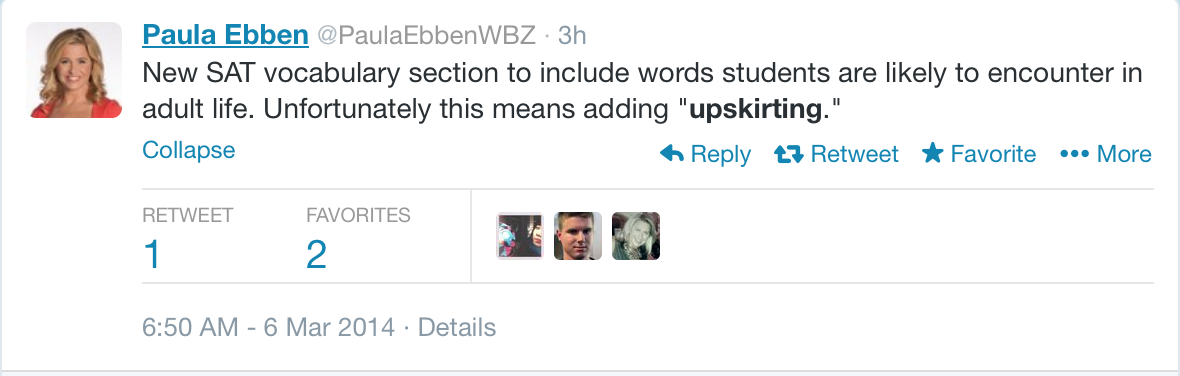
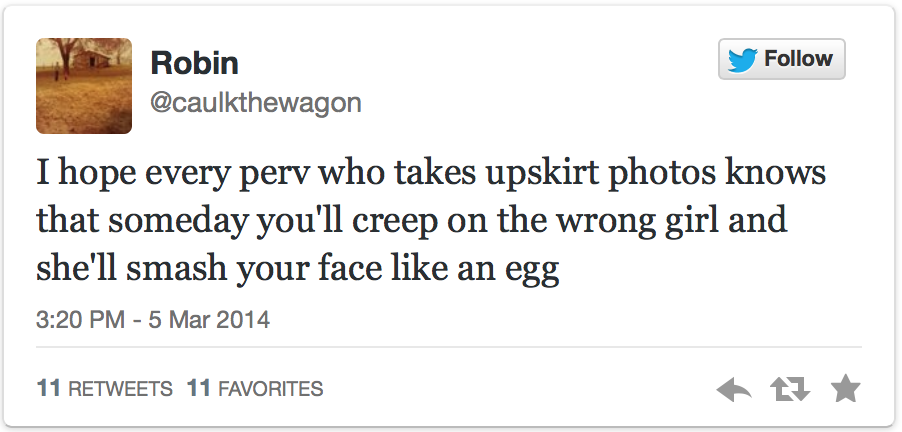
After the decision was announced, social media exploded against “upskirting.” Citizens claimed the right to privacy beneath their own clothing.

Screen Shot 2014-03-06 at 11.06.27 AM

Screen Shot 2014-03-06 at 11.06.09 AM

Screen Shot 2014-03-06 at 11.03.44 AM

Screen Shot 2014-03-06 at 11.07.04 AM

A slew of prosecutors and lawmakers disagree with the decision and are trying to change the law, agreeing that the technicalities of the law violate the spirit of protecting privacy.

It seems like the Massachusetts court system has some explaining to do.

Right now, the state has various wiretapping laws in place. According to the Digital Media Law Project, it is illegal in Massachusetts to secretly record a conversation, whether in person or by another medium. All parties must be informed of the recording in a conversation or telephone call. If the parties do not wish to be recorded, they have a right to leave the conversation.

But, it is legal to secretly snap photos of their underwear.

Maybe it’s just me, but I’ll give my consent to be recorded on tape rather than have someone sneak a few photos up my skirt without me knowing. Of course the privacy of conversations is important, but how can the courts assume that undergarments aren’t private too?

“Upskirting” is not only a violation of privacy, but also demeaning to women. Upskirters (if that’s a word now) should be aware that if they get caught, they may not be charged with violating privacy, but will likely be slapped with a sexual harassment lawsuit.

What goes up, must come down, just like the law on “Upskirting.”

Does God live in Hollywood?

By KELLY BRODY

The Oscars this past Sunday had it all: a pizza party, Meryl Streep and Pharell dancing, a record breaking selfie and, of course, many memorable acceptance speeches.

There was Jared Leto, whose heart-touching speech thanked his mom, acknowledged the tragedy in Venezuela and Ukraine, and was dedicated to the millions of people around the world with AIDs. Lupita Nyong’o made her speech all about following your dreams, saying, “When I look down at this golden statue, may it remind me and every little child that no matter where you’re from, your dreams are valid.” And of course, most every actor who accepted an award thanked their directors, fellow co-stars, and producers.

But this year, a common figure to thank in Oscar acceptance speeches was missing–God. It seems as though, in years past, the first person an award winner would thank would be God or Jesus. The only individual to mention God in their speech this year was the quintessential southern christian boy, Matthew McConaughey.

He did not just briefly mention God’s name either. McConaughey stated, “I want to thank God, because that’s who I look up to. He’s graced my life with opportunities that I know are not of my end or any other human end. He has shown me that it is a scientific fact that gratitude reciprocates. When you’ve got God, you’ve got a friend.”

Many people responded negatively to McConaughey’s religious devotion in his speech. Tweets like, “Shhh McConaughey stop talking about god you’re ruining it” (@astral_cars) and “When did Matthew McConaughey turn into Joel Osteen?” (@LaineyGossip) swirled about the “Twittersphere” during and after his speech. Even the audience in attendance did not respond too warmly to the God part of McConaughey’s speech, as there was timid applause in comparison to when McConaughey mentioned his dad in heaven and even quoted Dazed and Confused, McConaughey’s first major role, with “Alright, Alright Alright.”

Hollywood has always been seen as a more liberal land, with more libertarian views rather than the conservative. Strong religious views have been mocked and practicing religion is often seen as an ultra conservative activity in Hollywood, versus atheism or not practicing or declaring a religion at all. Hollywood is becoming very secular.

McConaughey’s breakaway from secularization and the negative response he received because of it is proof of the lessening presence of faith in our modern society. We treat those who are religious as the minority now, even “jesus freaks.” It’s just not “cool” or “hip” to be religious.

Maybe McConaughey, with his southern drawl, drug past, beautiful wife and shiny new award will change Hollywood’s perception of religion and mentioning God in a speech will draw actual applause rather than backlash.

Media fuel marijuana movement

By PHOEBE FITZ

Medical marijuana is now legal in 20 states across America — with two of those allowing recreational use — and the number is continuing to rise.

With 58 percent of Americans supporting the legalization of marijuana, this statistic is miles away from what it is was decades ago. What is contributing to this rise in acceptance?

Perhaps it is the media, as many Hollywood blockbuster movies show characters using marijuana. From Joseph Gordon-Levitt’s character in “50/50” using pot medicinally to ease his life with cancer, to Paul Rudd and Leslie Manns’ characters in “This is 40” eating pot cookies on a weekend getaway, marijuana use is being portrayed much differently and with much more acceptance than it was when “Reefer Madness” was released in 1936, for example.

Many TV shows depict marijuana use in this same casual way. It was an integral part of the plot of “That 70’s Show,” for example, as the show documented the main characters frequent use of it and subsequent laughs and adventures experienced because of it. Shows like this continue to influence the younger generations to see the use of marijuana as harmless and socially acceptable.

The Internet is another way support for legalization is being created. With countless websites dedicated to advocating marijuana, it is easier than ever for people to share their opinions and search for statistics, research and studies done on the subject.

For better or for worse — the general consensus is better — the media and Hollywood are fueling the fire that is marijuana legalization.

Websites push us to ‘pay attention’

By NICOLE HOOD

With the Olympic Games, world news has attracted a new sort of spotlight. Controversy over South Africa’s gold medal winner Oscar Pistorius’ murder trial has brought  Africa’s trial system into this spotlight and, subsequently, post-apartheid matters and conflict.

This is, by far, minor news compared to stories of dangerous protests and political meltdowns in Venezuela, Ukraine, Syria and Thailand. World news websites explicitly display videos and pictures of beaten protestors and tortured prisoners in an attempt to show, rather than tell, the horrors that are happening in parts of the world most people don’t ever really think about.

This takeover of news websites by world news gives me hope that the world today — all the people, consumed by day-to-day problems like bad drivers, test grades, piles of paperwork or long lines — will, in the midst of all the current international chaos, take a step back and at least acknowledge what is happening around the world.

Living in the United States, we have advantages that other countries don’t have: geographically, most countries have to cross the sea to get to us militarily; and the U.S. holds more than half of the entire world’s military power, keeping us safe and comfortable. Because of our strength and location, most of the younger generation in the United States do not even glance at the conflicts in European, Middle Eastern and Asian countries. The generation of our parents had to face the Cold War, but, as their children, we have not faced the immediate danger of an impending war and have no idea what the terrors of war could be like.

All of the sudden, though, front pages preview all kinds of internationally based stories: death, violence, and dangerous government reform protests in Ukraine, Venezuela, and Syria, Russia’s ‘declaration of war’ on Ukraine, North Korea’s missile launches, terrorist attacks in China, and radical groups dropping bombs in Nigeria. While not all of these attract the same amount of attention, the complete political meltdowns in Ukraine, Venezuela and Syria have attracted the gaze of those distracted American eyes.

Now, several writers on the Internet are calling on us to pay attention and help, saying that now there are so many conflicts that we cannot ignore them — saying that we have to take a stance on what’s happening. I believe that this is a growing trend and it has incredible potential. The younger generation is picking up on these articles and posting them on Facebook for their friends to notice. These articles call for my generation not only to take a stance but also to be passionate about it — to be passionate about it enough to at least educate others about the problem.

One article mentioned how my generation likes to liken itself to the generation of the 1960s, of Woodstock, peace and “flower power.” While we have our own form of Woodstock, while we carry the same “one love” attitude to these festivals, we are not them by any means. ‘They protested the Vietnam war, led a sexual revolution, fought for women’s rights and civil rights and changed the landscape of America for good.

We watch Netflix a lot and claim to be hipsters, but are okay with our alternative culture to be entirely superficial, free of substance or meaning. But we could be true hipsters, if we tried. There’s a lot that should be upsetting enough for us to integrate actual ideals and principles to our way of life beyond wearing boots in 80-degree weather and listening to music that sounds nothing like music.

I have one thing to say to these writers: preach on. Good luck, because in the midst of chaos, someone should be preaching about the problems that the world is facing. Maybe these articles on the Internet have more power than the writers think they do because they push for peaceful action, for standing up for what we say we do and for, at least, knowledge.

For more information, go to:

http://www.adolescentpress.com/2/post/2014/02/5-things-that-should-piss-every-teenager-off.html

People continue to love Woody Allen

By NICOLE LOPEZ-ALVAR

Film director Woody Allen has held both the most reputable and most controversial reputation in Hollywood during the past 50 years.

However, the biggest controversy to date involves a 22-year-old child molestation allegation against Allen, who is nominated for an Oscar for best original screenplay for his latest film, “Blue Jasmine.”

The scandal, which involved ex-wife Mia Farrow many years ago, was revisited in a recent open letter to The New York Times, where Dylan Farrow spoke publicly about the accusations that her adoptive father, Woody Allen, had sexually abused her when she was seven years old. “He told me to lay on my stomach and play with my brother’s electric train set,” she said in the letter. “Then he sexually assaulted me.”

While Woody Allen was neither charged nor convicted of the crime, news coverage of the controversy has left a permanent mark on his image in the public eye.

Despite the on-going media coverage of accusations and rumors, as his fans and movie connoisseurs well know, audiences worldwide have continued to adore his work, which is exemplified with his recent Oscar nomination.

It is fascinating how a person’s talent, impressive career, or honor in a field can have the magnitude to surpass all controversy.

A prime example of this type of spectacle is the infamous “Charlie Sheen meltdown” of 2011, where his multiple rehabilitation attempts led him to absolute mayhem and embarrassment — for Warner Bros., that is.

Behind all of the accusations and rumors that were being spread daily, he continued to be one of the highest paid actors of all time, and his show, “Two And a Half Men,” continued to be at the top of the ratings. In retrospect, his “breakdown” was drawing in more of an audience than ever before.

While these individuals continue to gain the power that comes with fame and success, there will always be thousands of incredible artists in the field that will never get the amount of attention they deserve. While this is no news, it is something to reflect upon this upcoming Academy Award season.

Instafame and social relationships

By CLARA BENDAYAN

“Wait, wait, wait! Let me take a picture of the sushi before you eat it. My followers are going to love how artsy it looks.”

Sounds familiar, right? Welcome to the age of Microfame and Instafame.

Not sure what that is? It’s simple, really. Social media and internet fame is sweeping the world.

With the influx of social media applications at our fingertips, regular people are becoming overnight celebrities by simply uploading five-second videos to Vine containing their daily shenanigans.

Being a celebrity used to involve the overwhelming process of going through auditions, facing rejection, living on low salary jobs just to pay the rent while you struck gold in Hollywood. Now, however, television and movies aren’t the only platforms that exist, and becoming famous isn’t as difficult as it used to be at least when it comes to social media notoriety.

With this platform, it’s easier to form some sort of connection with social media celebrities as opposed to famous Hollywood actors who rarely are able to reply back. Applications such as Vine, Instagram and Kik give users the option to answer their fans on a personal level.

“It’s a new kind of celebrity landscape because they can also reply back to you and it creates a more intimate connection,” said Jo Piazza, executive news director of In Touch and Life & Style magazines.

A documentary titled “Instafame” is going around Vimeo and it follows the life of Shawn Megira, a 15-year-old from Long Island, N.Y., who has more than 81,000 followers on Instagram.

His mom explains that she’s seen masses of fangirls crowd around him whenever they go out in public, only because they recognize him from his Instagram pictures.

I’ve seen countless Facebook friends post pictures with Instagram or Vine celebrities as well, and it begs the question of how social media fame affects teens and how it will affect them in the long run.

“It’s a very strong high. They’re getting a lot of attention but it’s not fulfilling what they deeply need and want in terms of this kind of human connection,” said Niobe Way, professor of psychology at New York University.

This social media is also creating a sense of validation for many people. Receiving 100 likes on an Instagram picture makes people feel good about themselves and gives them self worth. They feel validated by a group of peers or fans.

Another possible issue is that people seem to be living in the social media moment instead of basking in real life events. We all have at least one friend who cannot go a day without Instagramming a picture of their breakfast. Or another the friend that stops their car on the side of the road (or even worse, snaps a picture while driving) to take a picture of the sunset because they know that when they add a filter, their friends and followers are going to love it.

Is social media negatively affecting the way humans interact with each other? Are we wasting precious moments with loved ones while we snap the artsiest pictures for our followers? Is microfame the new sensation or is it just a dwindling fad?

Time will tell for the latter, as this topic is fairly new and the effects cannot yet be measured. In terms of the former, many people would argue that while social media bridges the gaps between people in different countries and facilitates communication, it is also playing a big role in making people antisocial.

FDA proposes new food labels

By SOFIA ORTEGA

It is funny how food companies trick costumers with their food labels by only listing amount per servings and the calories of the portion.

But, do people really have time to split the package by portions?

Most people would eat an entire bag of Doritos without knowing the calories for the whole bag, and what is true for many. People do not really take the time to split the bag of Doritos into the servings listed in the nutritional label.

However, it seems that from now on people are really going to know and understand the amount of calories they consume.

For the first time since 1990s, the federal Food and Drug Administration proposed changes to the food labels required to appear in the back of each package in order to reflect the real quantities Americans eat daily.

The label will be redesigned making it easier for consumers to understand it. Some packages will be required to show the amount per serving and per package, percent values will be shown on a left column, the amount of calories will be bigger, added sugars will have to be labeled, as well as the percentage of Vitamin D and potassium.

The FDA announced the new requirements at Michelle Obama’s fourth anniversary ceremony of her campaign “Let’s Move” destined to reduce obesity in the country.

“Our guiding principle here is very simple: that you as a parent and a consumer should be able to walk into a grocery store, pick an item off the shelf, and tell whether it’s good for your family,”

In the United States, data from a study made in 2010 by the Centers for Disease Control and Prevention revealed that 69.2 percent of adults of 20-years-old and older are overweight or obese.

The attempts of reducing obesity rates offer multiply benefits for the country. Of course, if obesity rates decrease there will be less people suffering or dying from diabetes, heart diseases, strokes and even cancer.

The changes may impact enormously food companies. Some business will reduce the amount of food per package to not loose costumers. Showing the real nutritional information will alarm people making them more aware of what they are really eating.

Nasty e-mail causes controversy

By TAYLOR HOFF

The popular website LinkedIn is designed to help people in the professional world establish their profile and search for future employees they can trust and who obtain needed credentials. This is a website where reaching out to others is encouraged and either you get the job, or not, no harm in trying.

However, if you’re reaching out to Kelly Blazek, there is in fact harm in trying.

Last week, Kelly Blazek, a woman named Cleveland’s “Communicator of the Year” for her popular online job bank for marketing professionals, realized the importance of playing it safe on social media – the hard way.

Ever since e-mail, Facebook, Twitter, and social media became popular high schoolers, college kids, and young adults were warned of the consequences these websites could have on your future. Making sure no questionable activity surfaces to potential future employers. However, once you get the job, it doesn’t mean you can let down your guard and inappropriately use social media.

When 26-year-old Diana Mekota added Blazek, she received quite the backlash.

After e-mailing her a professional note stating only her experiences and positive job seeking attitude, Mekota was expecting an e-mail of subtle rejection, an e-mail of acceptance, or no e-mail at all. What she got was unexpected by all.

Only hours after Mekota sent her original e-mail, she received an e-mail detailing how her “invite to connect is inappropriate, beneficial only to you, and tacky.” She continued on, “wow, I cannot wait to let every 26-year-old job-seeker mine my top-tier marketing connections to help them land a job.”

Within days the e-mail went viral. Surfacing on websites such as Buzzfeed, known for their humor and poking fun at outrageous situations.

Also within days, other people began coming out of the works claiming to have received similar e-mails from Blazek. In one of the e-mails she signed off  “Done with this conversation, and you.”

Blazek’s responses have created quite the frenzy in the media and she has since publicly apologized to all that she offended and deleted several forms of social media.

Although unfortunate to all involved, and potentially Blazek’s career, she has definitely made an example of herself. She proven it’s not only important to have a clean and reputable online appearance when seeking a job, but unquestionably important to maintain that appearance even when you’ve received your dream job and hold titles such as “Communicator of the Year.”

Press freedom tested in Hong Kong

By KERRIE HECKEL

Hong Kong is experiencing what CNN calls its all-time low in press freedom.

Historically, Hong Kong has served as the “window into China,” reporting stories about government criticism that mainland reporters could not or would not report.

However, Hong Kong is experiencing serious decline in their press freedom as journalists fall victim to being bullied out of reporting.

Protest organizer and veteran reporter Shirley Yam says headlines and complete pages have been removed from newspapers, columnists have been sacked, and interviews have been bought.

“We get calls from senior government officials, we get calls from tycoons, saying ‘we don’t want to see this in your paper,'” Yam said.

A prime example of oppression of the press in recent days is Kevin Lao.

Lao was editor for Ming Pao, a daily newspaper known for its coverage of human rights, before a Malaysian editor replaced him.

To add insult to injury, Lao was hospitalized Wednesday after being attacked with a meat cleaver. The source of Lao’s attack is unknown, however, many fear that if incidents like Lao’s aren’t addressed seriously and stopped, public fear will grow and Hong Kong’s press will be further prevented from running stories dealing with government and big business.

The issue in Hong Kong highlights the relationship between the press and its government. It seems there is a conundrum with the fact that journalists are supposed to serve the watchdog function over the same government that they depend on to give them the rights and safety to do so.

In the United States, we experience the luxury of a constitution that explicitly tells us there is freedom of press within the First Amendment. Checks and balances within the government makes sure this right is protected.

However, in places where the press is not so fortunate, being watchdog to the government can be dangerous, especially if the government doesn’t want to be monitored. This is the heart of the issue in Hong Kong.

Hong Kong legislative council member Cyd Yo told CNN, “Beijing is a control freak. It cannot bear any opposition.”

It seems to me that journalists and the public alike are on a long road for change in the special administrative region of China. While many are protesting now, what China needs is a fundamental change in how its government relates with the press and a change like this will need both time and passionate supporters.

Can social media end marriages?

By KYLA THORPE

Paula Patton announced  her separation from her husband of eight years, Robin Thicke on Monday.

This came as a shock to many, as these two usually seem to be happy and in love.

Many sites are rumoring that the split is because of Thicke’s behavior with Miley Cyrus during the MTV Video Music Awards last August. Apparently, the whole “twerking” thing didn’t go over well with Patton.

Now, I’m not saying necessarily that he should or should not have participated with Cyrus in the raunchy performance. While both he and Cyrus received a lot of backlash from groups ranging from parents to feminists, the performance caught a lot of attention — which is good in Hollywood.

Being an actress herself, I don’t feel like merely the performance would have upset Patton to such a degree. She understands that, as an entertainer, you have to entertain. I feel like to way it blew up afterwards, might’ve driven her to this point.

At first, she had claimed to not have been bothered by the performance, even liking it. That was just the morning after. Days, even weeks later, people were tweeting, reading, and seeing commentary of the performance on the news.

However, Patton truly felt about the performance originally, she felt 10 times worse after it blew up on social media.

I’ve heard about marriages breaking up over social media before, but many times it’s because one person in the relationship is found to be talking to someone else online, leaving inappropriate comments on pictures, and so forth.

This is a new aspect on the matter, however, because it would appear that Patton was humiliated after the performance when it went rampantly viral, changing her mind about being okay with it and pulling the plug on the marriage.

Granted, marriages aren’t perfect and there are always other things happening behind the scenes that could’ve ended this one, but this whole situation is a great example of how social media can follow you everywhere and eventually become your downfall.

UM women’s tennis under media radar

By LONELLE LEWIS

With five Top 10 finishes in the last six seasons and nine straight Top 15 finishes, the UM women’s tennis team is overlooked and deserves more news media attention.

People might not know this, but the Miami’s women’s tennis team is actually the most consistent athletic programs at UM.

UM womens tennisHaving covered its matches for two weeks, I actually had the chance to analyze the team closely.

Even though the team does not receive the media attention that it should, the women go out and support each other with minimal crowds in attendance.

Players are seen rooting each other on during the match to give their team a boost. The passion that these female athletes put into their sport is amazing.

It definitely is a fun environment to be around, and I would encourage members of the UM community to come out to matches.

Coach Paige Yaroshuk-Tews is an elite recruiter who is the all-time winningest women’s tennis coach in UM history. She is a superb motivator and teacher. Back when she played college tennis at UCLA, she made it to a #1 ranking in doubles and #13 ranking in singles, both in 1996.

When people think UM coaches, the first names that come to mind are Al Golden and Jim Larranaga. But if people would actually look at the women’s side, you have successful women coaches like UM basketball coach Katie Meier and Coach Tews.

Some people might find tennis boring, but if you actually go to a UM match, it is quite exciting. The goal is to one day get the stands filled with fans. The Neil Schiff Tennis Center is comfortable and capable of holding approximately 1,200 spectators.

Last weekend, the UM women’s tennis team held a kids clinic that brought out the largest crowd of the year, somewhere in the neighborhood of 250 people. It felt good to see this great tennis program receive this type of fan support. Not only was there a kids clinic, but there was free food.

President Donna Shalala was in attendance. She spoke about Coach Tews and the women’s tennis program.

“Coach Paige is amazing! The quality of the program shows. This demonstrates two things, first class athletics as well as academics,” Shalala said.

The team has to do whatever it takes moving forward to get fans to attend the matches. Maybe the marketing department can post flyers around campus and advertise through social media sites mainly for students to attend games. People just do not know how good this team really is.

Another way to get fans to the matches is by giving away free shirts and coupons to other events that they attend on campus. Maybe give students or fans who attend the games a free milkshake coupon for a baseball game. I guarantee some people will come to the matches just because the milkshakes are good.

To give the team more media access, UMTV could cover women’s tennis more or maybe The Miami Herald can write stories on the team or cover the matches. It seems like women sports are not promoted as much as men’s sports, which is unfair to these athletes. These girls are actually really good and deserve to be supported.

Right now 40th ranked Kelsey Laurente is playing consistently and climbing up the rankings in singles competition. She plays with so much energy and brings excitement to the court. If I could write a scouting note on her, I would say she has an amazing backhand and attacks the ball with powerful hits on every play.

Coach Tews talked about Kelsey’s play as of late.

“Kelsey is stepping up and taking a leadership role on this team.”

On another note, the doubles team of Clementina Riobueno and Monique Albuquerque are ranked 24th in the nation. They are 8-1 this season and could end the season in the top 10 rankings.

The 20th-ranked Canes host 56th-ranked Boston College tomorrow at noon. Hopefully fans will come out to support the most consistent athletic program at UM.

Be sure to follow UM women’s tennis @HurricaneTennis for the latest news on the team.
Awaiting the March madness

By RYAN HENSELER

The long month of February following the Super Bowl is often considered the worst time of the year to be a sports fan in America. Right now, SportsCenter has hardly any highlights to show and instead subjugates viewers to discussing Lebron James’ mask and Johnny Manziel’s height at the NFL Draft Combine.

But fear not, because as the calendar will soon flip to March, we are right on the precipice of arguably one of the best sporting events of the year: March Madness. The NCAA basketball tournament is a weeks long extravaganza of basketball and gambling across the nation.

What American among us doesn’t fill out multiple brackets in hopes of winning their office pool? Or just a bet with buddies? Who doesn’t love the first weekend of games, when anything is possible? When the clock hasn’t yet hit midnight for Cinderella and hopes remain to pull off a seemingly impossible upset?

Florida Gulf Coast University took the nation by storm in the 2013 big dance, becoming the first 15 seed to ever reach the Sweet 16 and earning the nickname “Dunk City” in the process. Years earlier, 11 seed George Mason stunningly advanced to the Final Four, beating powerhouse UConn to earn its trip.

Every single year, unbelievable endings are all but guaranteed and many unexpected heroes emerge. Their ranks include Steph Curry of Davidson, to Gordon Hayward of Butler, to TJ Sorrentine of Vermont. Rivalries have begun in the tournament, including the greatest individual rivalry in basketball history, Larry Bird vs. Magic Johnson.

Quite simply, March Madness is a magical time of year for basketball fans, a couple weeks where basketball seems pure and exactly how it’s meant to be.

Can you tell that I’m excited?

Limiting racial slurs in the NFL?

By JOHN RIOUX

In recent years, professional sports have instituted new policies to clean up the bad images they previously portrayed. For example, the NBA initiated a rule in which players had to dress professionally to attend their own games.

Now the NFL has proposed restrictions on offensive language use. I understand the NFL’s proposed rule. The league wants to rid an offensive word that is a racial slur from the field and locker rooms due to its disrespectful meaning.

This, however, is a middle ground in which the NFL improves its image without dealing with many other significant issues about race in society.

In recent years, there has been discussion of changing the Washington Redskins team name, yet no progress has been made. The NFL is worried about protecting its image, but apparently not at the expense of losing money.

The league sells Redskins’ merchandise, making millions of dollars a year without second thought.

I also wonder, if the NFL is serious about cleaning up the language used among players and coaches, why is the N-word the only one getting its own rule? There are many other offensive words that have racial undertones and are getting no attention from the league.

In today’s NFL culture, the N-word is common language amongst players. Will a referee throw a flag, if the word is used as a friendly gesture — or just as an insult?

I see the benefits this proposed NFL rule would have on the league. There are people who do not understand the harmful nature of this word. They do not understand its racial significance, and the removal of the word would bring these issues to the forefront of the news.

Even so, the NFL should step down. If the league only protects the N-word, it will make it seem other racially derogatory terms are not as important. Take more time and propose a rule that would rid of all demeaning words.

Violent backlash against Google Glass

By JENNA JOHNSON

The latest innovation from Google, the Google Glass eyepiece has recently caused quite a stir regarding the recording function of the device. Sarah Slocum, a tech writer, was allegedly harassed at a San Francisco bar for recording people with her Google Glass.

According to Slocum, the “Google Glass haters” gave her an obscene gesture, after which she turned on the record function of the device. She told them she was doing so and one man “ripped the Google Glass off [her] face and ran out of the bar.” The others reportedly robbed her of her phone and purse.

It is probably important to remember that the incident took place during the last call at a punk rock bar where the beer was flowing and the common sense was probably not. Still, it is interesting to note that both parties involved in Slocum vs. the “Google Glass Haters” reacted violently over a video recording that lasted barely more than 10 seconds.

We live in an age where many breaking news story videos are footage shot from a cell phone camera. The ease of Google Glass — portable, hands free, no fumbling for buttons — opens a whole new realm of opportunity in the digital age. The GoPro camera that straps onto objects such as a helmet is also hands-free, but the Google Glass allows for complete control of what is being captured. Although it would not be desirable for quality video in news, in a pinch, it could become any news-gatherer’s dream.

So what is causing the backlash with the public? How is recording on a Google Glass any different than whipping out a cell phone to take a quick video?

Some argue that it is because people can’t tell if they are being recorded or not. Google Glass advocates refute this by saying the Glass has a red light that turns on to indicate that it is recording.

Perhaps it is the fact that the Google Glass seems invasive by nature. The device can go wherever its owner goes and people find that type of technology more threatening than a video camera or even a cell phone.

Or maybe it’s because the Google Glass right now looks something reminiscent of a sci-fi flick.

I personally think that what it boils down to is that people are uncomfortable that they can’t easily see what the Google Glass is doing (as if it isn’t hard enough to get someone’s permission to be recorded anyway). The red recording button does exist, but it is small and definitely inconspicuous compared to a video camera or even a cell phone.

Bottom line, I think it is important to be upfront about recording people with any recording device. Google Glass is an amazing piece of technology, but the people pioneering its integration into society need to recognize the privacy concerns that arise with it.

Because if you’re ignorant about that, you’re bound to get your (Google) Glass kicked.

Dangers of life in the fast lane

By KELLY BRODY

A Grammy-award winning photographer, Ian Cuttler Sala, was killed on Sunday as the passenger of a car crash with Salma Hayek’s brother, Sami Hayek. Hayek, who was driving the 2006 Ford GT, survived the crash with facial lacerations and broken ribs. Sala and Hayek collided with a pickup truck driven by 20-year-old Alvin Javier Gomez, who suffered only minor injuries including a broken foot.

Police believe that the crash was caused by Hayek’s inability to handle the vehicle, which can reach an upwards of 205 mph. This crash marks the second deadly car accident in which the passenger, rather than the driver of the vehicle, has died. The first notable accident was the death of “Fast and Furious” movie series star Paul Walker back in November. Both in this case and Walker’s, no alcohol or drugs were involved in the accidents.

It’s become ingrained in American culture to worship fast cars. The luxury sports car market is one of male adoration, and they’re often used as a status symbol. Movies such as the Fast and Furious series, which garnered a cult fan base and amassed millions of dollars in the box office are a testament to America’s obsession with sports vehicles. Many popular video games also feature the “thrill” of driving fast cars. More points are rewarded if you drive fast, and often, destructively.

Unfortunately, the movies and video games don’t show the destruction that can amount from driving too fast. Justin Bieber tested his luck when he tried drag racing in a sports car in Miami Beach not too long ago and it amounted in an arrest. His fate was much better than that of Walker and Sala, who paid for the thrill of driving a fast sports car with the ultimate price — their lives.

While luxury sports cars provide nice eye candy, it should be noted that their fast nature should not be taken advantage of, and should be left to experts. Like many things in Hollywood, everything is not as it seems, and while it seems exhilarating to drive sports vehicles extremely fast, it is a dangerous activity that can have severe consequences.

Hopefully, news coverage of the deaths of Sala and Walker will bring attention to this growing issue. In the age of texting-while-driving, and driving while intoxicated, another danger on the road is the last thing we need.